


There are days when I like to climb in the car and drive around to the library or local bookstores to raid their classics sections. It's one of my favorite hobbies. I live for this stuff.
Most weekends I drag my husband and daughter along as they patiently wait for me to browse the aisles. My husband inevitably comes over to ask if we need all of these books. I run another quick audit and maybe put back one or two, but firmly say, "Yes, we do." He's there to be my pack mule and lug all the treasures to the car. And then our usual back-and-forth begins.
“How much did this cost?”
“They were only $2 each. It’s like they were giving them away.”
On one of those raids, I went to Barnes & Noble looking for the books I recommended in my last article, Looking to Read the Great Books? Start Here: The Iliad by Homer, Antigone by Sophocles, Apology by Plato, and Frankenstein by Mary Shelley.
The goal was to see if a first-time reader could find these four Great Books in their local bookstore. After all, they’ve been read, taught, and argued over for centuries. This should be easy.
Alas, it wasn’t as straightforward as I thought.
Starting in Fiction
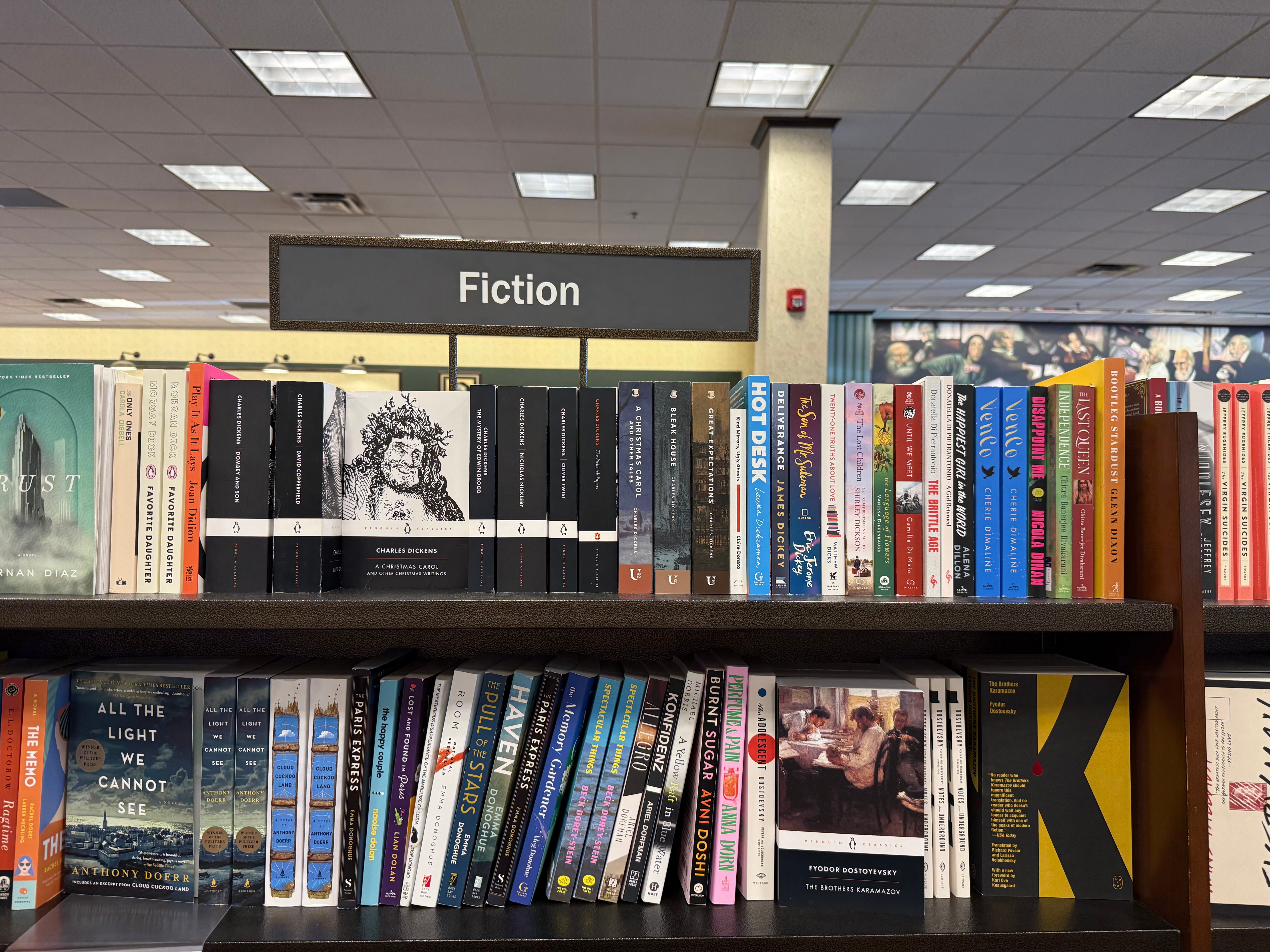
I walked through the doors of my local Barnes & Noble, a place that always warms my heart, and headed to the first section where I thought I would find them. Fiction. I figured I’d find three of the four books here: The Iliad, Antigone, and Frankenstein.
I started with Homer. H…O…M… Okay, no Homer in Fiction. Looking for Sophocles… also a bust. They must be in the Poetry section.
Well, that eliminated two, but Frankenstein. I was sure it belonged in Fiction. Mary Shelley…looking…S…H… Nothing. That's strange.
I found Pride and Prejudice, The Brothers Karamazov, Moby-Dick, and others. But no Frankenstein. Scratching my head, I shelved Shelley, so to speak, and walked over to Poetry.
It’s All Greek to Me
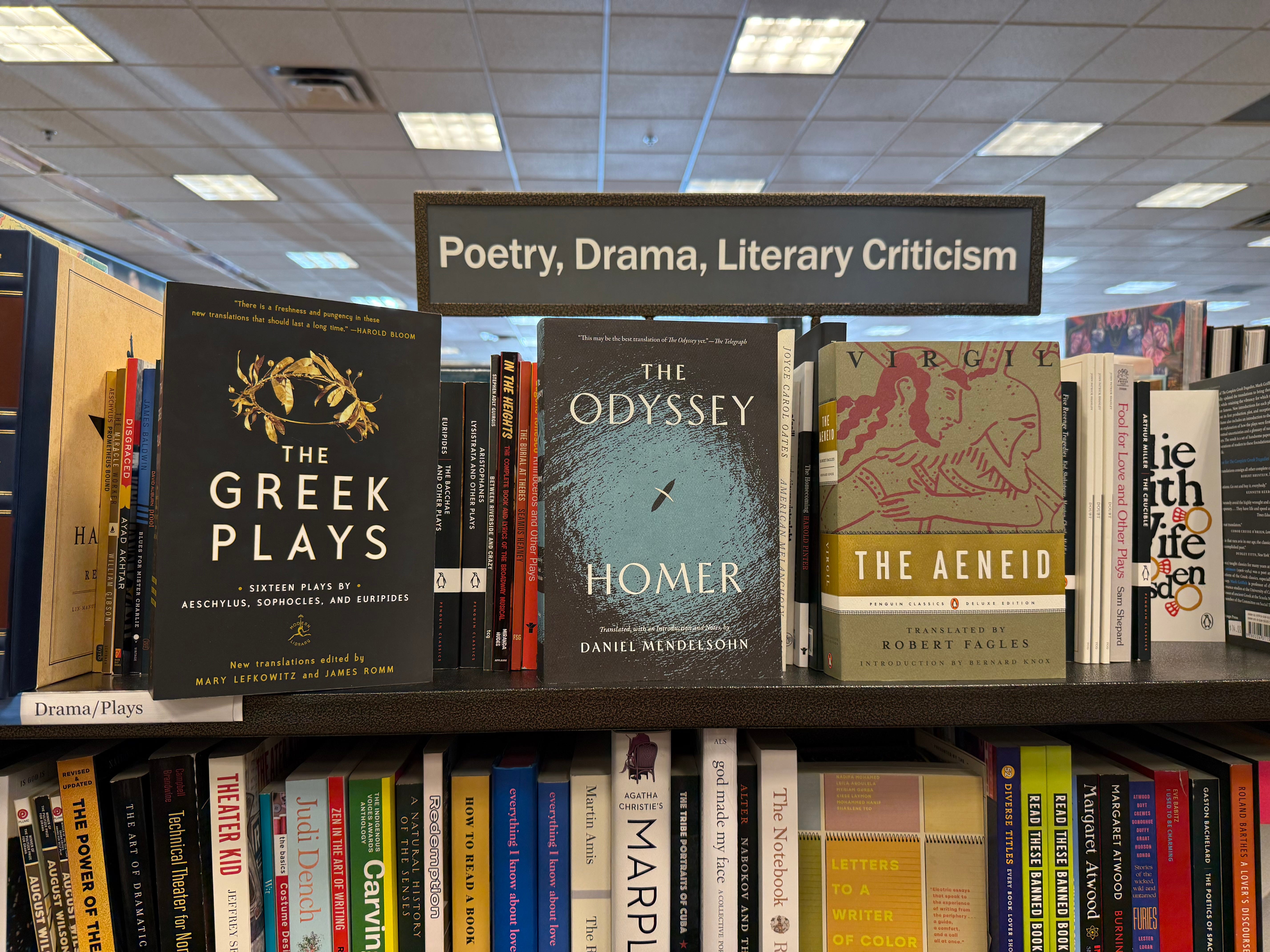
In the Poetry, Drama, and Literary Criticism aisle, I found Homer, along with the Greek playwrights. I spotted Antigone. Both were in the translations I was looking for. So I marked those off my list and headed to the Philosophy section where I hoped Plato resided.
Looking for Plato
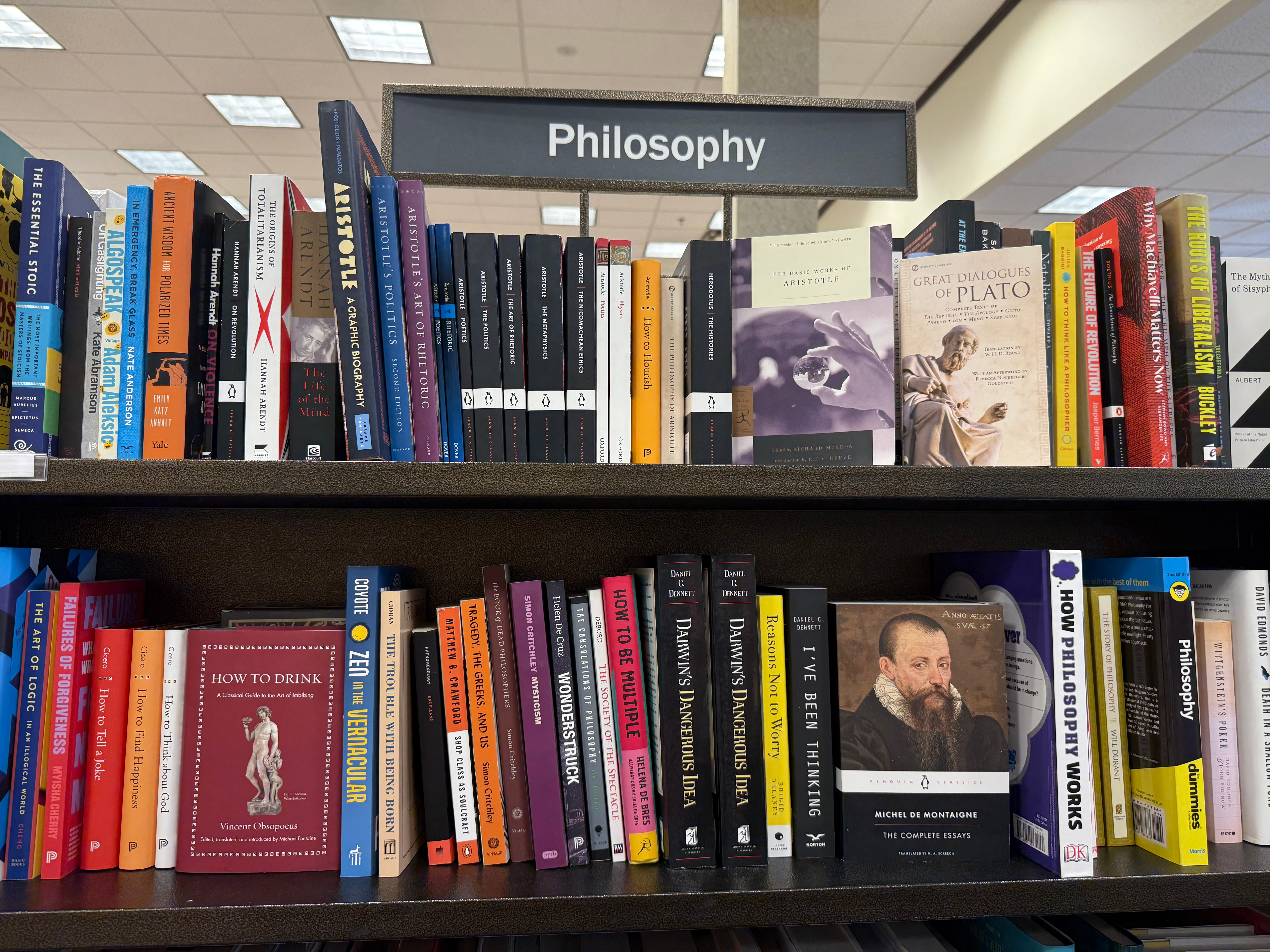
Plato was a footnote to the philosophy section. His presence was barely visible. There was one collection of Plato’s works. Luckily, it contained the Apology. But it wasn’t the edition I was looking for. Sigh.
Side note: Somehow Montaigne was in Philosophy and not in the Essays/Literary Criticism section I was just in, which made no sense to me.
Still Looking for Frankenstein…
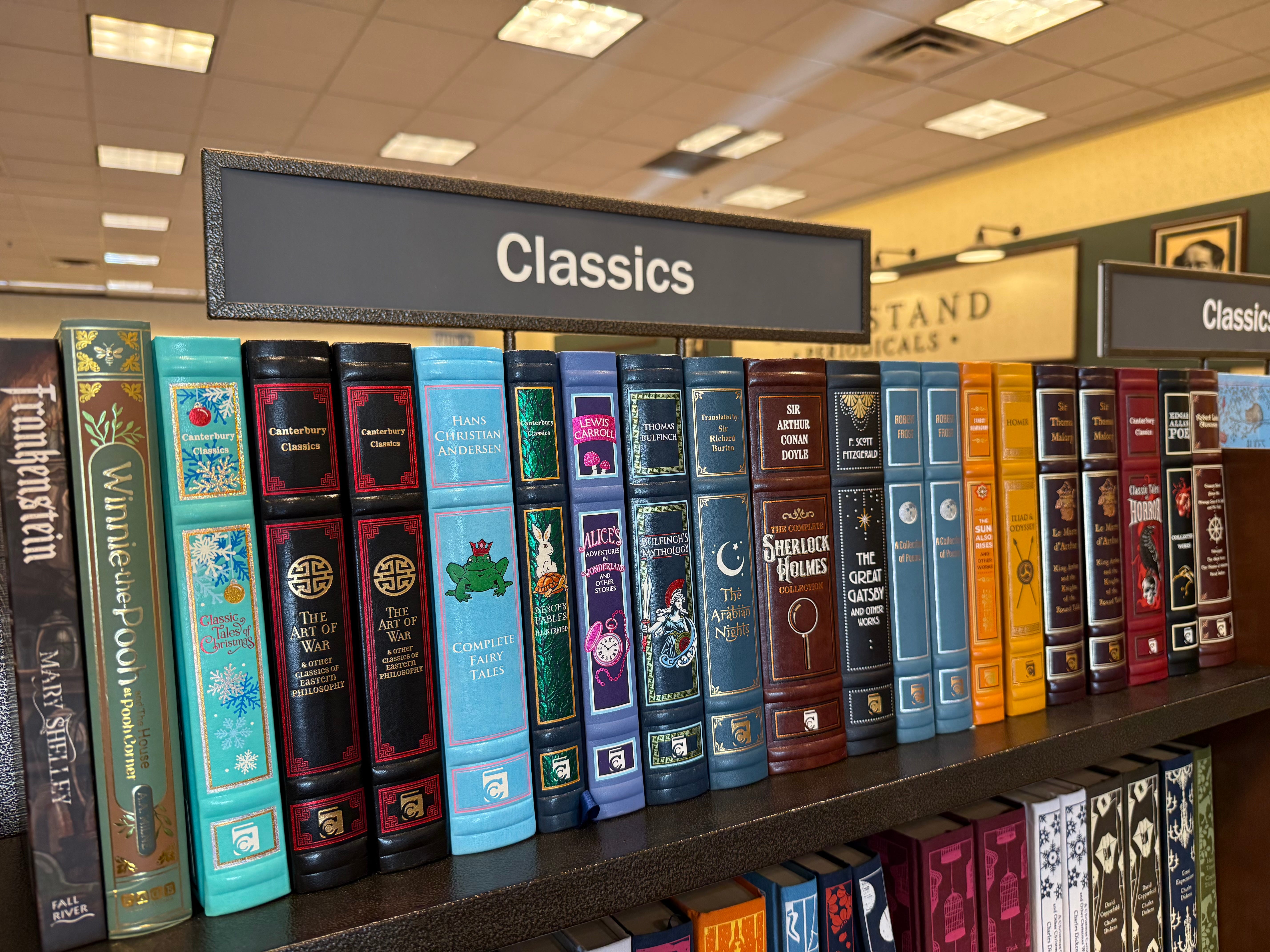
I hustled back to the other side of the store. Facing the cafe was a series of shelves that held the Classics. Beautiful, glossy hardcovers. The kind of books that would look smart on your shelves at home. But they weren’t what I was looking for. I needed paperbacks, ones I could bend and write in.
I found The Iliad and Frankenstein in beautifully gilded hardcovers, but no paperback edition of Frankenstein.
Baffled, I wondered whether I had accidentally missed Shelley in Fiction. Unless there was a mob that had recently run through the doors and snatched up all of Frankenstein, she had to be there.
So I went back to the Fiction section, scouring the shelves for Shelley. Nothing. In a final act of desperation, I marched over to the information booth and asked, “Where can I find Frankenstein?”
A young woman with jaded eyes and a flat tone said, “Horror.”
I had my answer.
Oh, the Horror!
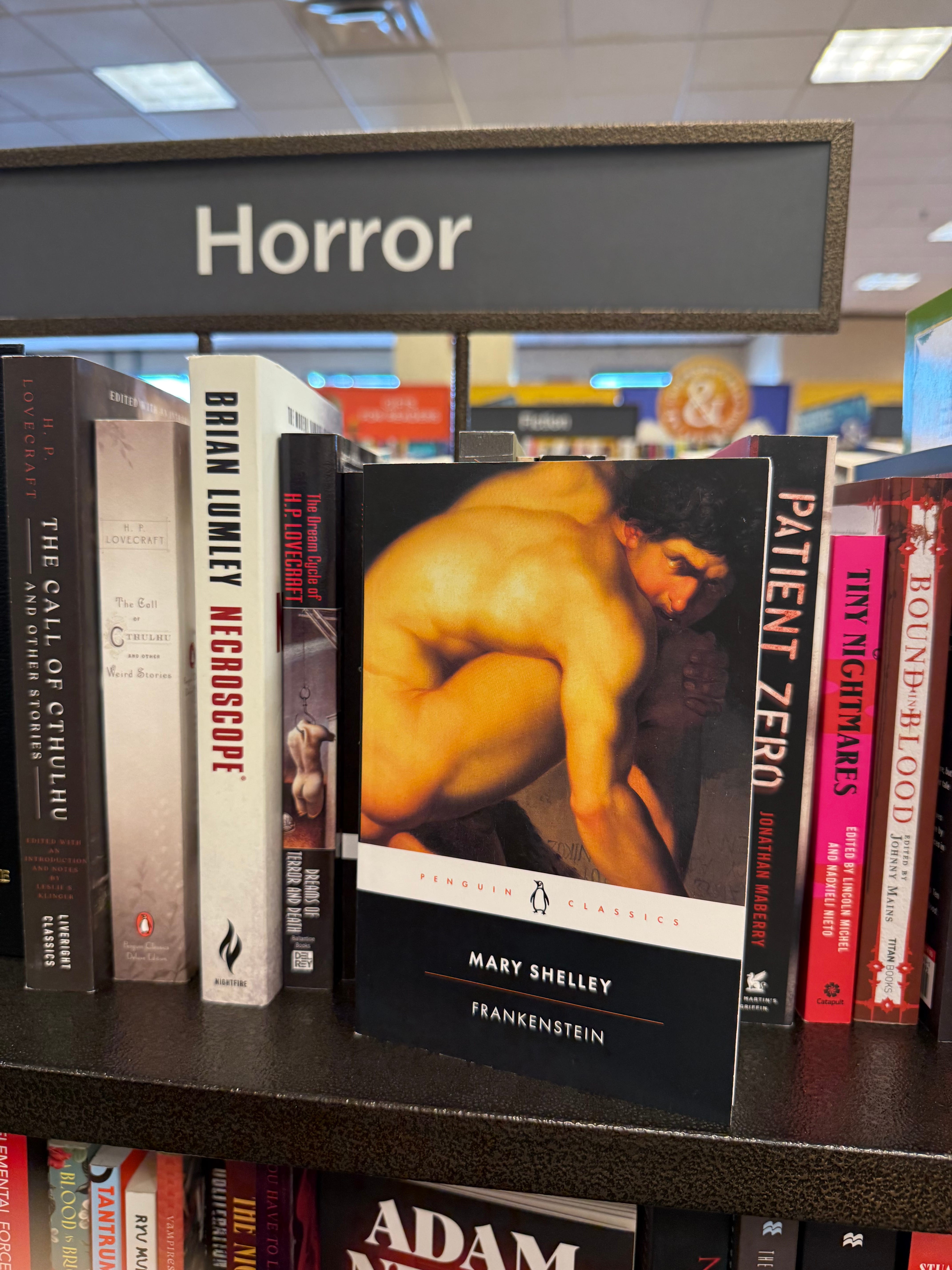
Shelley was located in Horror, which horrified me. Stuck there in the darkness, away from her literary companions. I was genuinely shocked. Why Horror and not Fiction? I get that Frankenstein can be categorized as horror. But dear God. What is the average person who wants to read the classics supposed to think when they’re directed to the Horror section to find Mary Shelley?
It’s a scandal. I protest. Put Shelley in Fiction with her kind.
Why Are the Great Books So Hard to Find?
After finding all four books, I realized a few things. My local Barnes & Noble needs to rethink how the classics are organized so that a reader trying to find the Great Books has an obvious place to go.
The problem is that the very reader who most needs help finding the Great Books has to know in advance whether Homer is Poetry, Shelley is Horror, Plato is Philosophy, and Dostoevsky is Fiction. Why not stick them all together?
When I was standing in front of the decorative Classics section, I saw this in real time.
Several young people walked over, eager, bright-eyed, picking up Homer and Austen. (For a moment I thought, “We’re gonna be all right.”)
Then I saw a young man scouring the shelves, visibly frustrated. An employee walked past and he belted out, “Where is Crime and Punishment?” Then I heard that same familiar, flat tone respond, “Fiction.”
So what did I learn from my raid?
Some stores are making the Great Books too hard to find.
Buying online is unavoidable when your local bookstore doesn’t carry a particular edition or translation.
Oh, and when you’re lost, the best move is to ask someone for help. (Even if that leads you to the Horror section.)
Here’s a reading guide to take with you to your Barnes & Noble.
A Great Books Guide for the Bookstore
1. The Iliad
Homer’s epic set during the tenth year of the Trojan War.
Introduces Achilles, Agamemnon, Odysseus, Hector, Priam, and the Greek gods.
Sets the stage for The Odyssey, The Aeneid, and much of the literature that follows.
Edition: Fagles translation, Penguin Books (ISBN 978-0140445923).
Where I found it: Poetry, Drama, Literary Criticism.
2. Antigone
Sophocles’s short play about Antigone’s decision to bury her brother against Creon’s order.
Asks what happens when obligations to the gods and the dead collide with the law of the city.
Edition: Sophocles I, The Complete Greek Tragedies, third edition, University of Chicago Press; Antigone translated by Elizabeth Wyckoff (ISBN 978-0226311517).
Where I found it: Poetry, Drama, Literary Criticism.
3. Apology
Plato’s short dialogue presenting Socrates’s defense before the Athenian jury against charges of corrupting the youth and impiety.
Apology comes from the Greek apologia, meaning a defense, not an “I’m sorry.”
Edition: Hackett, Plato: Five Dialogues (Euthyphro, Apology, Crito, Meno, Phaedo), translated by G. M. A. Grube (ISBN 978-0872206335).
Where I found it: Philosophy (but not this edition. Had to order it online.)
4. Frankenstein
Mary Shelley’s Gothic novel about Victor Frankenstein and his creature, drawing on the stories of Genesis, Prometheus, and Paradise Lost.
Edition: Penguin Classics, Frankenstein: The 1818 Text (ISBN 978-0143131847).
Where I found it: Horror (Some stores may shelve it in Fiction.)
tolle lege
Barnes Ignoble strikes again!
Great write up. I have also found it less than intuitive when looking for certain books in B&N. I always treated it as a treasure hunt, but I am a little more experienced when it comes to finding books. A new reader wouldn't be, to your point.
The classics section should contain all classics and if need be can be categorized, including HORROR 😀